
Termite Bait Stations vs. Liquid Barrier: Which Fits Texas Slab Homes?
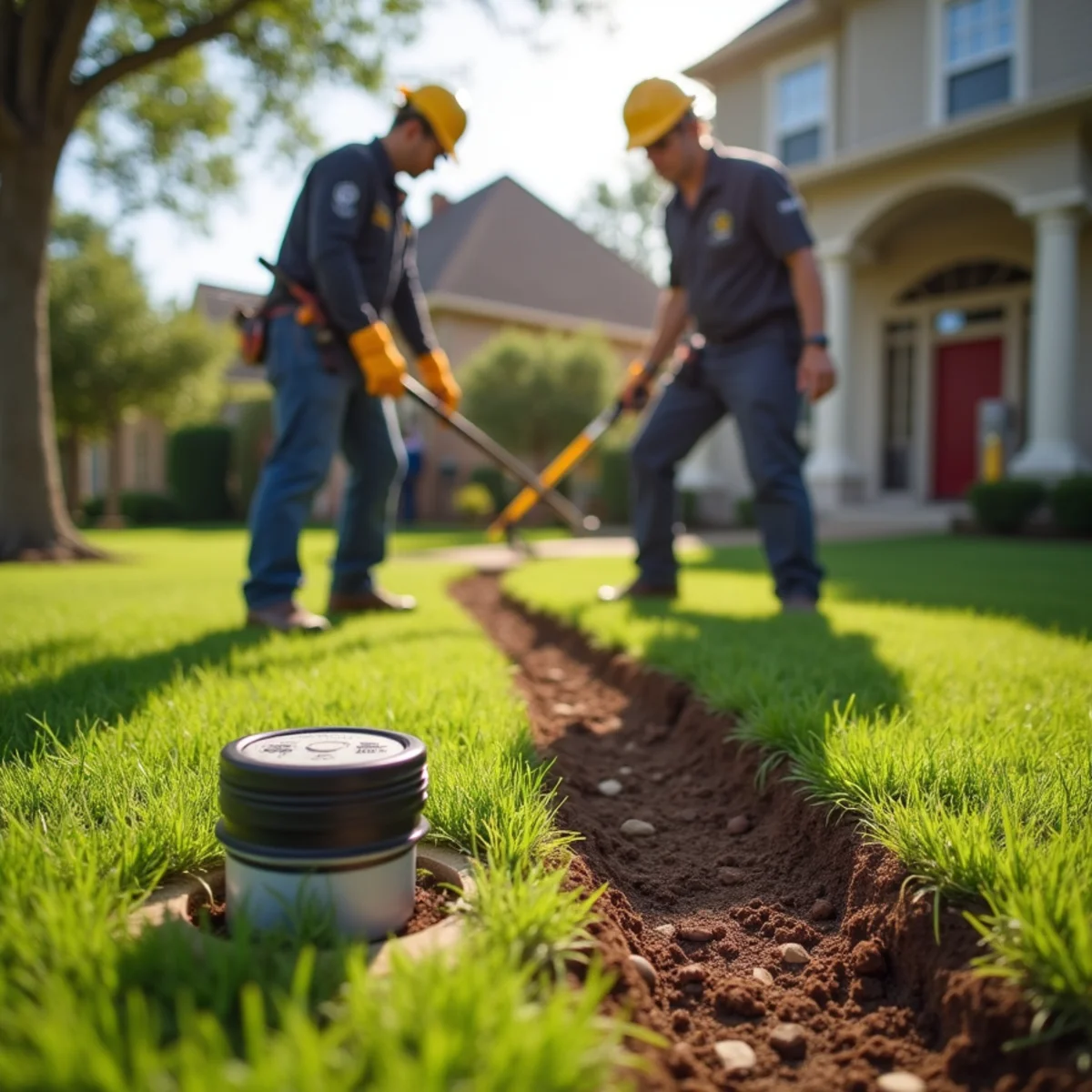
Liquid soil barriers (like Termidor) provide immediate chemical defense around exposed foundation soil, while bait stations (like Sentricon) eliminate whole subterranean colonies without drilling through concrete patios or risking chemical runoff into nearby waterways.
Two Competing Philosophies of Structural Termite Defense
When safeguarding a Texas residential property against subterranean termites (Reticulitermes flavipes) and destructive Formosan termites (Coptotermes formosanus), pest management professionals deploy two distinct, highly engineered technologies: non-repellent liquid chemical soil barriers and in-ground colony-elimination baiting systems.
Both methods carry proven track records of protecting single-family structures, but they operate on fundamentally opposite entomological mechanisms:
Liquid soil barriers aim to create a continuous, impenetrable chemical moat around the home's concrete foundation beam, poisoning termites as they attempt to forage toward the structure.
Baiting systems, conversely, use termites' natural foraging biology against them, using appealing cellulose bait matrices impregnated with chitin synthesis inhibitors to systematically collapse the entire subterranean colony, including the reproductive queen, before workers ever reach the slab.
The Engineering of Liquid Non-Repellent Soil Barriers
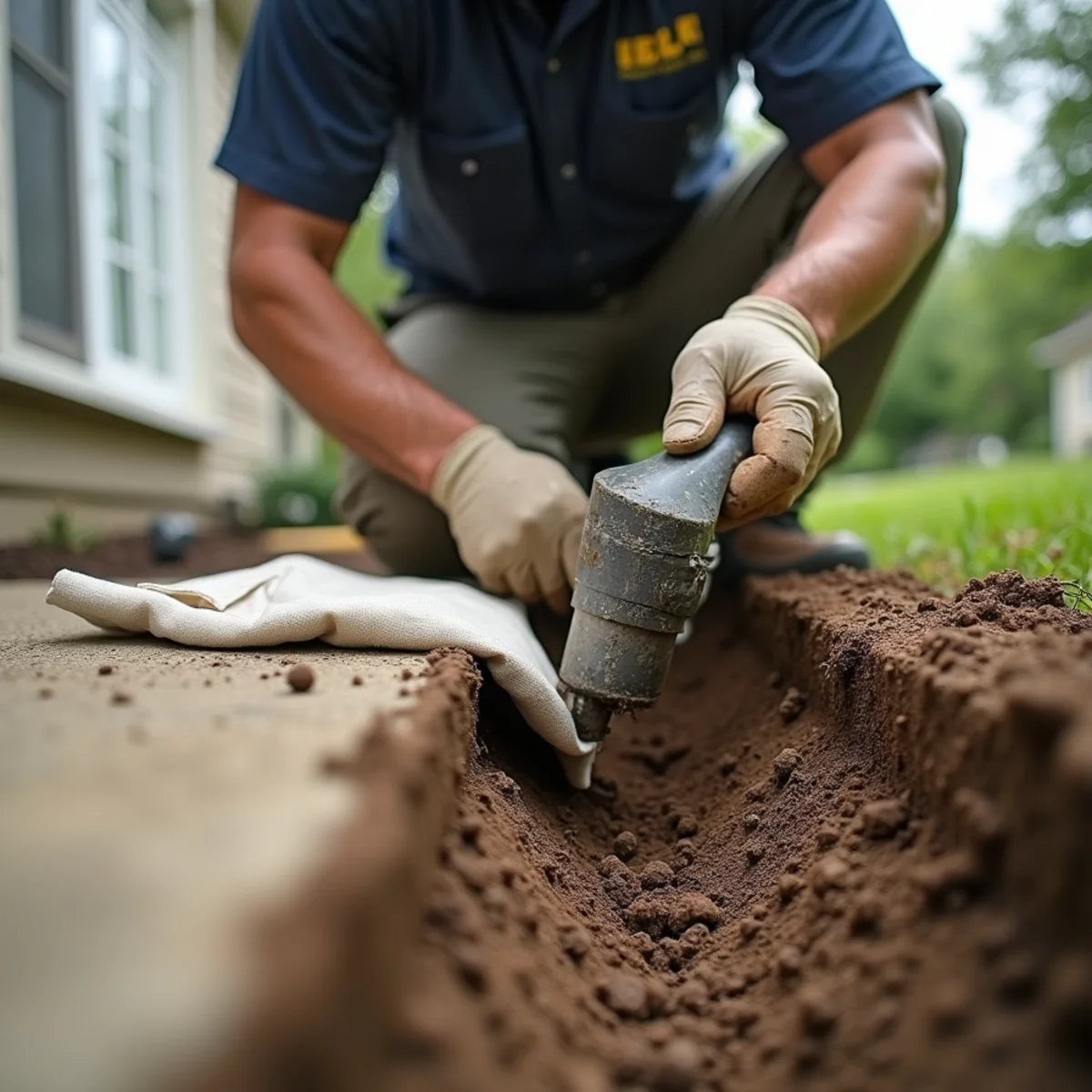
Liquid termiticide treatments have served as the industry benchmark for decades. Modern professional liquid barriers rely on non-repellent active ingredients—predominantly Fipronil (Termidor SC). Because the chemistry is undetectable to insect olfactory receptors, foraging termites do not avoid the treated zone.
Instead, worker termites tunnel through the treated soil, absorbing microscopic droplets onto their exoskeletons and ingesting the chemistry. Through social grooming (trophallaxis) and mutual contact, infected workers unknowingly transfer the lethal compound throughout the subterranean colony—a biological phenomenon known as the 'transfer effect.'
However, establishing a true continuous barrier on modern Texas slab homes requires extensive structural labor. Technicians must excavate a 6-inch by 6-inch trench along all bare soil foundation perimeters, flooding the trench with 4 gallons of finished termiticide solution per 10 linear feet. Furthermore, wherever concrete driveways, covered patios, stone pool decks, or air conditioning pads abut the foundation, technicians must drill 1/2-inch vertical holes every 12 inches through the concrete to rod chemical into the underlying soil, followed by patching the drill holes with mortar plugs.
Need Immediate Guidance for Your Home?
Our local Humble coordination team is ready to answer questions and schedule on-site evaluations.
The Science of In-Ground Termite Baiting Systems
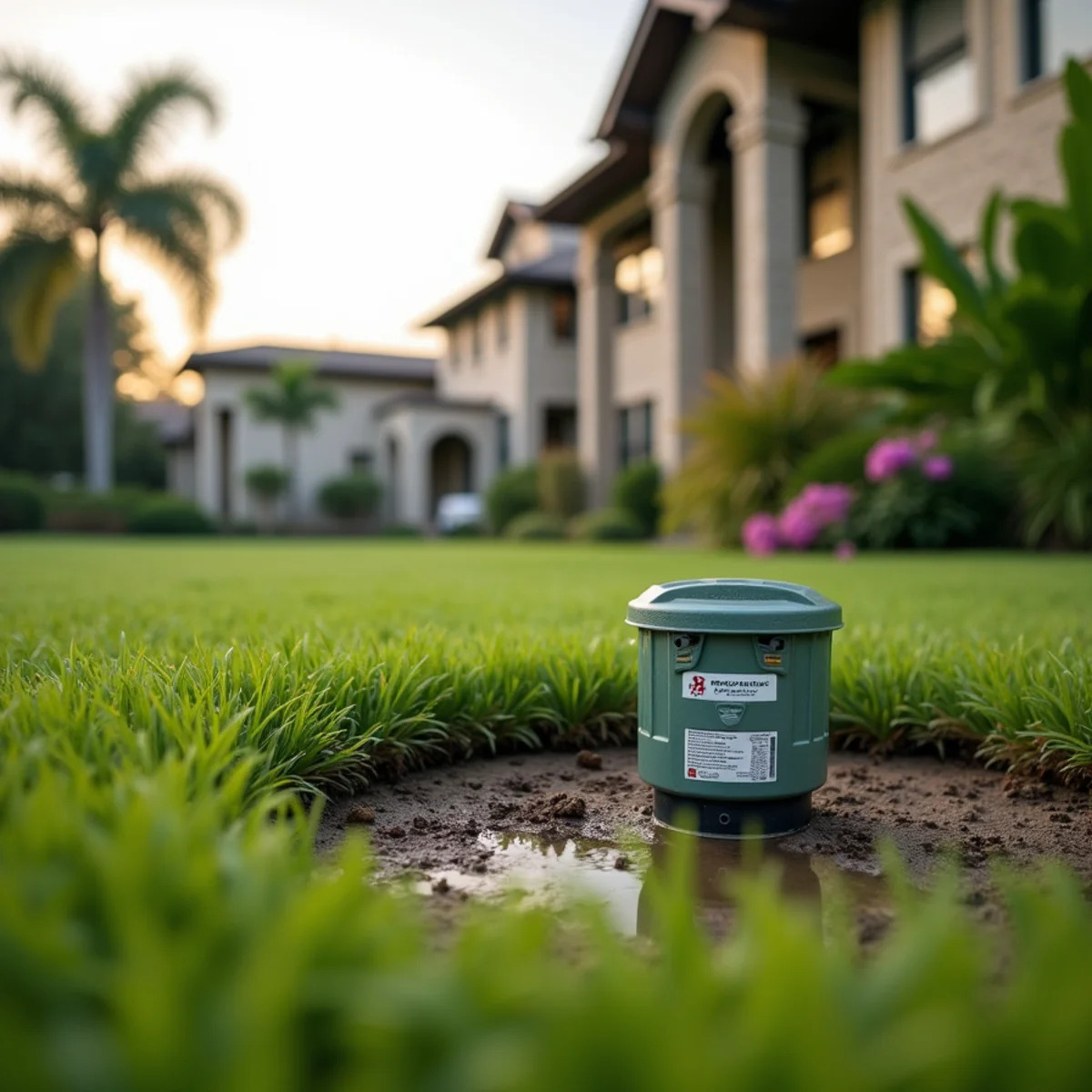
In-ground baiting systems—exemplified by the industry-leading Sentricon System with Always Active technology—revolutionized termite management by eliminating the need for destructive drilling and trenching.
Technicians core flush-to-grade cylindrical stations into the turf every 10 to 12 feet around the property perimeter. Each station houses a dense, moisture-resistant cellulose rod infused with noviflumuron, a slow-acting insect growth regulator. University research proves subterranean termites actually prefer the purified cellulose in bait stations over natural southern yellow pine lumber.
When subterranean termites discover a bait station, they establish pheromone trails recruiting thousands of nestmates to feast. Noviflumuron inhibits the synthesis of chitin, the essential molecule required for termites to produce a new exoskeleton during molting. When workers attempt their next molt cycle, they cannot shed their skin and perish. Starved of workers to forage and feed them, the soldier caste and reproductive queens die, achieving total colony collapse.
Head-to-Head Comparison: Liquid vs. Bait on Texas Foundations
Evaluating the operational and structural differences between these two solutions helps homeowners make the right investment:
- Immediate Structural Protection: Liquid barriers provide immediate toxic defense at the foundation beam within 24 to 48 hours of application. Bait stations require foraging termites to discover the stations, typically achieving colony collapse within 60 to 90 days.
- Property Aesthetics & Structural Invasiveness: Bait stations are completely non-invasive, installed flush with lawn grass without disturbing flower beds or drilling decorative tile. Liquid treatments require extensive trenching, potential landscaping disruption, and drilling visible mortar plugs every 12 inches through custom concrete patios.
- Environmental Water Table Safety: On waterfront properties along Lake Houston, San Jacinto River canals, or homes with shallow water wells, EPA regulations strictly limit high-volume liquid termiticide injections to prevent groundwater contamination. Bait stations contain zero loose liquid chemicals and are 100% eco-friendly near aquatic ecosystems.
- Longevity & Foundation Settlement: Texas expansive clay soils shrink and swell dramatically between wet springs and scorching droughts. This continuous soil movement can physically shear and rupture liquid chemical barriers within 5 to 7 years. Bait stations are unaffected by soil movement and provide continuous lifetime protection as long as stations are inspected annually.
Which System Is Right for Your Northeast Houston Home?
Choose a Liquid Chemical Barrier (Termidor) if: Your home is currently suffering an active subterranean termite infestation with mud tubes on the slab edge that requires immediate knockdown; your foundation perimeter is mostly bare soil and mulch with minimal concrete flatwork; and you prefer a one-time treatment that does not require mandatory ongoing annual service contracts.
Choose an In-Ground Bait System (Sentricon) if: You have extensive concrete flatwork, flagstone patios, or travertine pool decking wrapping your foundation that you refuse to drill; your property borders Lake Houston, a retention bayou, or sensitive waterways; you desire proactive whole-colony elimination before termites ever reach the slab; or you want verifiable electronic monitoring.